



Recent Posts
Popular Categories
Contributors
 Partner
 Partner
 Special Counsel
Archives
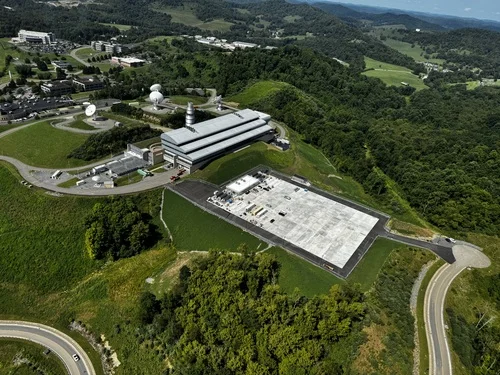
The potential for artificial intelligence (AI) data centers to generate massive, reliable streams of local property tax revenue makes them highly attractive for recruitment to support economic development. This influx of capital can fund public services, local school systems, and community infrastructure improvements without requiring local governments to raise taxes on residents. This is especially attractive in West Virginia where there is a declining tax base. If the state could capitalize on this enormous opportunity, it could truly be transformative.
Despite the compelling benefits, both advocates and opponents of new AI data centers share a common worry: the strain on electricity costs, grid infrastructure, and water systems. These are legitimate concerns that deserve close attention.
Why does AI require so much power? To answer that, we must look briefly under the hood. Processing AI tasks is incredibly energy-intensive. A single AI search can use up to 10 times the electricity of a traditional Google search. Generating text takes 0.17 to 2 watt-hours per prompt, while image and video generation can demand exponentially more, sometimes equivalent to powering an average U.S. home for several days.
Anxieties over rising power bills are well-founded because the energy consumption of an AI data center far exceeds that of conventional facilities and continues to grow exponentially. For example, traditional data center server racks draw between 5 and 15 kilowatts (kW), whereas today’s AI-optimized racks require 40 to 100+ kW. For context, a typical home water heater uses about 5,000 watts while operating. Furthermore, traditional servers consume 300 to 500 watts, while high-performance graphics processing unit (GPU) servers require up to 5,000+ watts.
These power requirements are escalating. A single next-generation NVIDIA Rubin Ultra rack, highly sought after by AI data center operators, is projected to pull up to 600 kW. A single frontier-model data center campus housing just 1,500 of these ultra-dense racks would require 900,000 kW (or 900 megawatts (MW)) for the compute hardware alone. Factoring in networking, storage, and liquid cooling, the total grid draw would easily surpass 1,000 MW (1 gigawatt). Additionally, maintaining AI computational performance requires massive cooling systems to prevent servers from overheating, driving facility power requirements even higher.
The Pennsylvania-New Jersey-Maryland Interconnection (PJM) spans 13 states and is the largest regional electric grid operator in North America. West Virginia is part of this network. The PJM grid was not designed to support a heavy concentration of AI data centers, nor even the large volume of conventional data centers built over the last two decades. This rapid proliferation has strained the grid, prompting complaints that everyday families and small businesses are unfairly footing the bill for the massive infrastructure upgrades needed to support these operations.
This may sound like an article arguing against AI data centers, but, in fact, it is intended to highlight the enormous economic opportunity they represent for West Virginia. Many data center projects are stalling across the nation because most communities don’t have a reasonable solution to the power issues. Nonetheless, the demand for data centers continues to grow. Therefore, any region or state that can provide a mitigating solution stands to reap the economic benefits.
The electricity challenges are created when a data center connects to a system like the PJM. Therefore, if the data center doesn’t need to connect to the local power grid for its primary power, the issues are mitigated or even eliminated. The microgrid legislation passed by the West Virginia Legislature a few years ago coupled with the state’s natural gas industry provides a powerful energy generation alternative for data centers. West Virginia is the perfect location for data center operators to build their own natural gas microgrid system to power their operations.
The data center operations require the microgrid to be connected to a reliable and scalable fuel source. This is where West Virginia has a potentially transformative opportunity. There are very few places in the United States that provide a more scalable and reliable fuel source than that provided by West Virginia’s natural gas reserves. Development of natural gas microgrids has been enabled by legislation passed in 2025. Development of microgrids in the state has already been enabled through legislation. The question is: What else needs to be coupled with the microgrid legislation to entice these data center projects to the state?
Adding the requirement that all data centers in West Virginia have natural gas microgrids and that all data centers achieve 100% water recycling will address concerns over escalating electric utility bills.
By establishing these guardrails, West Virginia can reap the enormous economic benefits of the AI boom with virtually no negative impact on consumer electric bills or public infrastructure. In fact, excess electricity generated by these microgrids could be fed back into the PJM, lowering electricity costs for local consumers and small businesses. Securing this opportunity would also significantly boost the state’s natural gas industry. Utilizing West Virginia’s natural gas locally to drive state-level economic growth would truly be the icing on the cake.
 Jim Estep has served as president and chief executive officer of the High Technology Foundation since June 2000. Under his leadership, the I-79 Technology Park has expanded to nearly 400 acres and more than 800,000 square feet of office and laboratory space. His recruitment efforts have attracted major federal programs in supercomputing, satellite operations, and cybersecurity, advancing economic diversification in West Virginia. Estep serves on the board of the Mid-Atlantic Aerospace Complex and holds degrees in computer science from West Virginia University and the West Virginia Institute of Technology.