



Recent Posts
Popular Categories
Contributors
 Partner
 Partner
 Special Counsel
Archives
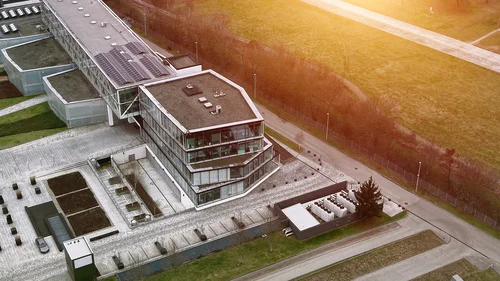
Someone is knocking on our door. Should we answer? Answering the door may have risks. Not answering, however, may pose the greatest risk of all.
Data centers are knocking today, and West Virginians are witnessing and debating the arrival of technology complexes that would process and energize data, the exploding currency of our time. When the 21st century dawned in 2000, few of us imagined what the technology explosion could mean for West Virginia.
Here we are today, fully aware that our economy must be stronger if West Virginia is to realize its potential as a state that offers employment, affordable living, and safe communities. After decades of lamenting the downturn of the West Virginia economy, we are poised to join an American and global movement that values what data centers produce.
The West Virginia Legislature understands that data center developers see value in West Virginia. Those developers appreciate the availability of our energy, people, and proximity to half the nation’s population as crucial assets that can benefit their operations. They also want to hire people and pay taxes in a state that needs both employment and financial support. They understand our citizens’ expectations and want to be good and generous neighbors.
Through its approval in 2015 of the Certified Microgrid Development Program, House Bill 2014, the Legislature established an initiative under the West Virginia Division of Economic Development that encourages the production of high-impact industrial plants and facilities that rely on electricity. In simpler terms, the program encourages the development of data centers.
The numbers are impressive. Data centers generate significant revenue and, therefore, pay significant local and state taxes. Prosperous Loudoun County in Northern Virginia is a case in point. Data centers now pay about $1.1 billion per year in taxes to Loudoun County, which has about 450,000 residents—that’s nearly 40% of its annual budget. Yes, data centers have been active for many years in Loudoun County, which is a leading data hub, but this is just one example where data centers generously support local communities and state government.
Let’s examine how data centers exist. Their users, which include Meta, Google, Amazon, and emerging artificial intelligence (AI) companies, must have access to supercomputing power. Those companies pay for data centers’ services. In turn, data centers pay taxes. The vast majority of data center customers are in the United States and the world, not in West Virginia. Those customers include local and regional banks, hospitals, and even motor-vehicle owners. That means data centers will attract revenue from outside our borders while employing our residents and paying significant taxes to operate here. That is the economic model of 21st-century technology.
Data centers have changed communities in other states for the better but not all West Virginians see the benefits. I ask them to consider this: While we are grateful that energy and manufacturing remain the backbone of our economy, we are entering a new age. Technology and data centers are forming the nucleus of the 21st-century economy, and we now have an opportunity to become part of a technology industry that is essential to the future of the United States.
Please keep this in mind: We recognize that broadband service is essential in modern America, and we have struggled in West Virginia to build out broadband to communities and remote areas. We have slowly made progress. Recognizing that, do we really want to oppose projects that support the power of broadband and its performance? We cannot hide from the advance of technology. We can be a part of its evolution.
While West Virginia missed the early days of the data explosion, we need not abandon our hopes for a better future. The data explosion continues, and West Virginia is now positioned to realize the benefits from major investments in data centers and their operation.
As a member of the West Virginia Legislature and an advocate for data center investment in West Virginia, I have come to realize the following:
- Not all data centers are created equal—we have seen that in other states. The Legislature is aware that no industry is perfect, but good actors and the benefits they deliver far outweigh the bad.
- Data centers do not have to rely on the electric grid for power. Many acquire or generate their own. That means their operations have no effect on local electricity ratepayers. The Legislature and data centers, recognizing a federal government mandate, are protecting ratepayers.
- Many data centers can provide tremendous financial benefits to West Virginia taxpayers, counties, and communities. The Legislature has directed certain percentages of property taxes from data centers to specific entities, including county and state government. In particular, schools would benefit. At the same time, the Legislature sought to relieve the burden on existing West Virginia taxpayers.
That leaves us with real hope for a brighter future in which data companies pay their share in taxes, employ our residents, and benefit our families, communities, state, and nation. West Virginians can have a wonderful and lasting future.
Let us consider a question and an answer:
The question: The families and communities of the 19th and 20th centuries built the traditions and culture we respect and enjoy today. We want to preserve what’s best about West Virginia and strengthen our communities, but how?
The answer: Our future depends on West Virginians recognizing the state’s opportunities and having the will to strengthen our economy. We all want to live in communities where schools, hospitals, local businesses, and churches can flourish. We want to enhance the quality of life here, and that possibility awaits us. Ours can be a more diverse economy that encompasses both traditional industries and emerging technology-based enterprises.
We hear the knock at our door, and it gives us hope. Do we have the will to answer, to understand that we can have a stronger economy and healthy communities? West Virginians are smart, practical, and hospitable people. I am confident we are ready to answer.
 Elected to the West Virginia Legislature in 2016, Senator Glenn Jeffries chairs the Senate Economic Development Committee. He represents the 8th Senate District, which includes Clay and Roane counties and parts of Kanawha, Putnam, and Jackson counties. Jeffries is the founder and president of Putnam County-based Cornerstone Interiors Inc. The company provides an array of construction services. He has been active in economic development through his membership in the Putnam County Economic Development Authority. Born in South Charleston, Jeffries graduated from Poca High School and attended West Virginia State University. He is married and has two children and three grandchildren.