



Recent Posts
Popular Categories
Contributors
 Partner
 Partner
 Special Counsel
Archives
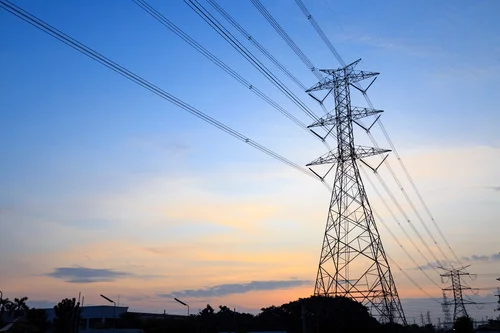
The rapid growth of data centers presents Virginia and West Virginia with significant economic development opportunities. These facilities bring private investment, construction activity, high-paying jobs, tax revenue, and demand for new energy infrastructure. At the same time, their substantial electricity needs have raised important questions for utilities, regulators, policymakers, and consumers: Who should pay for the infrastructure required to serve this growth, and how can existing customers be protected?
The answer lies in applying long-standing regulatory principles that have governed utility service for decades. With thoughtful planning, fair cost allocation, and clear regulatory oversight, states can attract large-load customers while preserving reliability and protecting ratepayers.
The Regulatory Principle: Costs Should Follow the Customer
Electric utilities have an obligation to provide safe and reliable service to all customers. Before a data center or other large-load customer connects to the grid, utilities must determine whether sufficient generation and transmission capacity exists, identify any required upgrades, and evaluate how those investments will be funded.
Central to this analysis is the principle of cost causation: Customers who drive the need for new infrastructure should bear an appropriate share of the resulting costs. This concept has long served as a cornerstone of utility regulation and will play an increasingly key role as data center development accelerates.
For regulators, the challenge is ensuring that tariffs, service agreements, and infrastructure investments are structured to support growth without shifting unreasonable costs onto existing residential and commercial customers. When applied effectively, cost-causation principles allow states to welcome new investment while maintaining fairness across the customer base.
Why Large Loads Can Benefit Existing Customers
Public debate often focuses on the costs associated with serving data centers. Less attention is given to the potential benefits that large-load customers can provide for the electric system.
Much of the cost of providing electric service is fixed. Generation assets, substations, transmission facilities, and distribution infrastructure must be built and maintained regardless of how many customers are connected to the system. When significant new customers contribute to those costs, the financial burden can be spread across a broader base.
This dynamic is particularly relevant in parts of Appalachia that have experienced population decline and the loss of major industrial customers. Historically, manufacturing plants, chemical facilities, coal operations, and other energy-intensive industries supported a substantial portion of the electric system’s fixed costs. As many of those facilities closed or reduced operations, fewer customers remained to support much of the same infrastructure.
Large-load customers such as data centers present an opportunity to reverse that trend. Their long-term demand can support investments in generation, transmission, and grid modernization that strengthen the overall system. When costs are allocated appropriately, new load can help support infrastructure that benefits a broader set of customers while contributing to a more resilient electric grid.
Economic Development Beyond Energy
The implications of data center development extend far beyond utility regulation.
Construction of a modern data center campus can create thousands of jobs over several years while generating opportunities for contractors, engineering firms, suppliers, and service providers. Once operational, these facilities can contribute substantial tax revenue that supports schools, public safety, transportation infrastructure, and other community priorities.
For regions seeking to diversify economies that have historically depended on manufacturing or resource-based industries, data centers offer a pathway to attract significant private investment. In many cases, large-scale technology projects can also attract complementary businesses and encourage additional economic development.
As states compete for these investments, policymakers must balance economic opportunity with broader public interest considerations, including infrastructure needs, land-use planning, environmental impacts, and long-term community benefits.
The Need for Regulatory Clarity
Sustained investment depends on regulatory certainty.
Utilities, developers, investors, and consumers all benefit from transparent rules governing infrastructure cost recovery, reliability obligations, and service to large-load customers. Clear regulatory frameworks provide confidence for developers while helping ensure that existing customers remain protected.
Recent discussions regarding load management and emergency curtailment illustrate the importance of regulatory clarity. Questions concerning which customers may be interrupted during reliability events, and under what circumstances, involve significant public policy considerations. These decisions affect homes, schools, hospitals, businesses, and critical infrastructure and are therefore appropriately addressed through established regulatory processes rather than ad hoc decision-making.
Well-defined rules allow utilities to focus on planning system improvements, maintaining reliability, and investing in infrastructure necessary to support growth.
Looking Ahead
Virginia and West Virginia are well positioned to benefit from the continued expansion of digital infrastructure. The question is not whether growth should occur but how it should be managed.
The most successful approach will be grounded in familiar regulatory principles: reliable service, sound planning, fair cost allocation, and protection of existing customers. When those principles guide policy, economic development and customer protection need not be competing objectives.
Properly structured, data center growth can expand economic opportunity, support critical infrastructure investment, strengthen the electric system, and create long-term value for communities across both states. The opportunity for regulators and policymakers is to ensure that these benefits are realized in a way that is equitable, sustainable, and consistent with public interest.
 Brian Abraham is the president and chief operating officer of Appalachian Power. He previously served as chief of staff to West Virginia Governor Jim Justice and continued in that role following Justice's election to the U.S. Senate. Abraham also served as general counsel for the Justice Administration and as prosecuting attorney for Logan County, West Virginia. A U.S. Army veteran, he retired as a brigadier general after 22 years of service. Abraham holds degrees from Fairmont State University, U.S. Army War College, and West Virginia University College of Law.