



Recent Posts
Popular Categories
Contributors
 Partner
 Partner
 Special Counsel
Archives
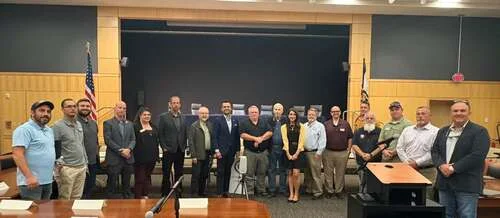
West Virginia should welcome investment but not by surrendering the authority to protect its communities. My concern with House Bill 2014 is not whether data centers belong here. It is whether residents retain a meaningful voice in where facilities locate, how they operate, and who bears their costs. As a Republican, Jefferson County commissioner, and commercial real estate appraiser, I support private investment, property rights, and responsible development. Government should apply rules fairly, not pick winners and losers by giving one industry a fast pass. Welcoming investment should not require surrendering local authority or overlooking neighboring property owners’ rights.
What Our Neighbors Require
HB 2014 exempts certified high impact data centers and microgrid districts from local zoning, noise, lighting, viewshed, development, and land use requirements. Those exemptions remove tools communities use to evaluate compatibility and require protections. Our neighbors have chosen a different approach. Frederick County, Maryland, directs data center development through a Critical Digital Infrastructure Overlay Zone, with site plan approval and requirements addressing noise, lighting, screening, and residential buffers. Loudoun County, Virginia, strengthened local oversight in March 2025 by replacing by-right data center permissions with a special exception process, subject to grandfathering provisions. Its standards address equipment screening, generator testing hours, and preconstruction and postconstruction noise studies. Neither approach guarantees perfect outcomes. Both preserve the ability to evaluate proposals, impose protections, and respond to local conditions. Why should West Virginia communities have fewer tools?
Compliance Is Not Compatibility
It would be inaccurate to say only federal protection remains. HB 2014 preserves State Building Code compliance and specified financial obligations, but those requirements do not replace local land use review. A structurally sound building can still occupy an unsuitable location.
Compliance with a permit does not answer every question about nearby homes, equipment placement, cumulative development, or infrastructure capacity. The technical details matter. For water, I want annual consumption, peak-day demand, proposed sources, and drought contingencies. For noise, I want analysis reflecting operating conditions and effects on neighboring properties. For infrastructure, I want responsibility established for costs, expansion, and eventual closure. These questions should shape decisions before approval, not become explanations offered after residents experience problems.
Equal Rules, Not a Fast Pass
Jefferson County already has a zoning and land development framework for its unincorporated territory. Our municipalities exercise their own land use responsibilities. We are not starting with a blank map. Yet certified projects receive exemptions unavailable to businesses generally. How do we explain that distinction to a small business owner navigating ordinary zoning requirements?
If our processes are unnecessarily burdensome, we should improve them for everyone. Government should not champion the free market while creating an industry-specific exemption. Consider the incentive this creates. When neighboring jurisdictions require stronger safeguards, removing comparable requirements here risks attracting companies seeking the least demanding path. That does not mean every developer will cut corners. It means public protection cannot depend on every company voluntarily exceeding the minimum.
Leading Before Decisions Are Made
That is why I brought together elected leadership from all five Jefferson County municipalities and led the Jefferson County Good Neighbor Data Center Guardrails effort.
We submitted to the state a coordinated statement of common-sense protections reflecting Jefferson County voices. Our priorities include water protection, low-water cooling, transparency, noise safeguards, appropriate buffers, and clear infrastructure responsibilities. These guardrails do not replace local authority. Each jurisdiction has distinct responsibilities and circumstances. Nor does submitting recommendations mean the state has adopted enforceable protections.
It means we acted rather than allowing others to define our expectations.
I will continue pursuing both immediate safeguards and amendments restoring meaningful local control. Those goals are complementary, not contradictory. We have an 18-wheeler coming. I will not lie down and wait for it to hit us.
Leadership means organizing now, asking difficult questions, and securing protections before our options narrow. West Virginia can welcome innovation without making reduced oversight its competitive advantage. The standard should be measurable benefits, enforceable obligations, and a meaningful local voice in decisions our communities will live with for generations.
 Commissioner Cara Keys serves as vice president of the Jefferson County Commission, bringing experience in real estate, community leadership, and public service to her role. Married to her high school sweetheart and a mother of four, she is a third-generation appraiser and owns a commercial real estate appraisal firm. Keys is a past president and current board member of the Rotary Club of Shepherdstown and is involved with various boards and community groups. She advocates for transparent government, responsible development, and meaningful local input while working to protect Jefferson County’s character and strengthen its shared future for generations to come.