



Recent Posts
Popular Categories
Contributors
 Partner
 Partner
 Special Counsel
Archives
Never in my lifetime has my home state of West Virginia seen so much potential for economic investment. While I hope otherwise, we may never see it again in the life I have left. Because of that, and for the reasons I will detail below, I am an unapologetic supporter of responsible data center projects in the Mountain State.
While some may see political risk in strongly supporting these projects, I believe the far greater risk is to our children and grandchildren if we fail to capture this opportunity. West Virginia can turn its energy resources, industrial heritage, workforce, and geographic advantages into a new generation of long-term economic development. Data centers can be an important part of that transition but not simply because they are data centers—the benefits must obviously extend beyond the companies building them.
If developed responsibly, these projects offer three key opportunities:
- A substantial, recurring tax base that provides significant new revenue for county governments, public schools, infrastructure, and statewide tax relief
- A new workforce ecosystem for electricians, engineers, technicians, construction workers, and skilled trades
- These are real jobs, and we need as many of them as we can get.
- Economic diversity while building upon existing strengths in energy, manufacturing, and industrial infrastructure
- Diversification is long overdue. These projects give us an opportunity to make that happen.
There is not enough space here to fully detail the economic benefits of a hyperscale project in our state. Consider just two proposed projects in Mason County—Nscale’s Monarch Compute Campus and Starwood Digital Venture’s Project Tamarack represent approximately $76.9 billion in planned investment, according to the West Virginia State Treasurer’s October 2026 analysis.
That investment is projected to generate approximately $231 million in annual property tax revenue when fully implemented. That means approximately $90 million annually for public schools and $47.5 million for the Mason County Commission. Additional revenues would be distributed for things like statewide infrastructure projects. These are extraordinary numbers, and the potential prosperity does not stop at property taxes.
The construction phase of Nscale’s Monarch campus is estimated to support more than 4,000 jobs. Then, more than 600 permanent jobs are projected. For those who argue that construction jobs are just temporary, I invite you to ask our building trades whether they are excited for more than 4,000 jobs that keep West Virginia workers close to home.
Moreover, Nscale has announced multiple phases for Monarch. That means our tradespeople could find sustained, years-long employment at one location over multiple phases of development. As the son of a construction worker, I understand how important that is to a family whose mom or dad often works far from home.
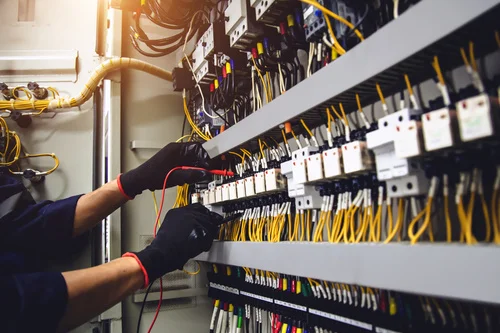
I have also heard misinformation about the scope of permanent jobs these projects create: “Not many” or “Just a few security guards and a janitor!” Nothing is further from the truth. A project like Monarch requires skilled workers in electrical systems, industrial automation, HVAC and advanced cooling, fiber optics, cybersecurity, engineering, and many other fields. These facilities require continuous maintenance, equipment replacement, network management, and technical services long after construction is complete.
These are the kinds of jobs West Virginia has been fighting for as we have exported our greatest asset: West Virginians. Now, we have an opportunity to create new careers and sustained economic activity in communities that are too often left behind.
Again, these projects require responsible development. West Virginians deserve assurances that they will not be asked to subsidize projects through higher utility bills or environmental costs. Developers must pay their way for the electricity and infrastructure. The good actors in this industry understand this, and we should welcome those companies.
For those who still object to these projects because they are data centers, what alternative would you accept? I have started asking groups I speak with whether they would support a $60 billion pepperoni roll (our unofficial state food) factory. It’s a tongue-in-cheek question, but it makes a point. We should judge economic development projects by their actual impacts and benefits, not by the industry niche they are in.
There is nothing inherently problematic with a building full of computers. Like any development, data centers must be properly located, designed, and operated. I have personally stood outside a responsibly designed data center. It is no louder than other valuable projects like a hospital.
During my time in the Legislature, our most difficult discussions always center on the budget. How do we pay for foster care, disability benefits, veterans’ programs, roads, fire and EMS services, police, schools, and other essential services West Virginians depend on? How do we also pay for the nice things that make our communities better places to live, like our state parks?
The answer is strengthening our economy and creating better-paying jobs. Now, we can do so with our own energy resources rather than extracting and shipping them elsewhere. We have spent generations producing coal and natural gas that power other states’ economies. Data centers offer an opportunity to power West Virginia for West Virginians.
I would gladly welcome that $60 billion pepperoni roll factory to West Virginia. Until that day comes, responsibly developed data centers represent possibly the greatest economic investment opportunity our state has ever seen. The question is whether we approach that opportunity with vision and discipline.
Our children and grandchildren will live with the consequences of our decisions. I want them to inherit a West Virginia with stronger schools, more opportunities, a broader economic foundation, and good-paying careers that allow them to build their futures here at home.
To that opportunity, I say yes.
 JB Akers was born and raised in West Virginia. He and his wife, Maryclaire, who is now a circuit court judge, met in law school. They have raised their three wonderful kids in Kanawha County while being very active in their community. Akers began his service in the West Virginia House of Delegates in 2024 and has chaired the House Judiciary Committee since 2025. His driving passion as a legislator is to improve the economy of West Virginia and the lives of the people who live there.